Accueil 5 Museum 5 The Collections 5 Juliette Roche

Juliette Roche

Albert Gleizes (Paris, 1881 – Saint-Rémy-de-Provence, 1953)<br />
Composition, 1922<br />
Gouache sur papier collé sur carton<br />
Achat des Amis du musée Estrine<br />
Inv. ME.2003.17</p>
<p>En 1922, poussé par ses premiers élèves, Gleizes entreprend l’écriture de son ouvrage La Peinture et ses lois où il développe et précise ses théories plastiques : « Peindre, c’est animer une surface plane, c’est en rythmer l’espace ». Pour cela, l’artiste définit deux notions fondamentales : la « translation » et la « rotation » des plans. La première s’intéresse aux plans droits qu’elle envisage dans des déplacements latéraux de droite à gauche (et inversement) ou combinés. La seconde, comme son nom l’indique, considère les variations des plans obliques à l’intérieur du cercle. L’association de la « translation » et de la « rotation » laisse apparaître des formes traitées en aplats qui soulignent les différentes animations du plan.  Cette œuvre séduisante en est une des premières illustrations.</p>
<p>Crédits : Albert Gleizes, Composition - ME.2003.17 © Musée Estrine, cliché Fabrice Lepeltier - Adagp, Paris 2023<br />

Paris, 1884 — Saint-Rémy-de-Provence, 1980

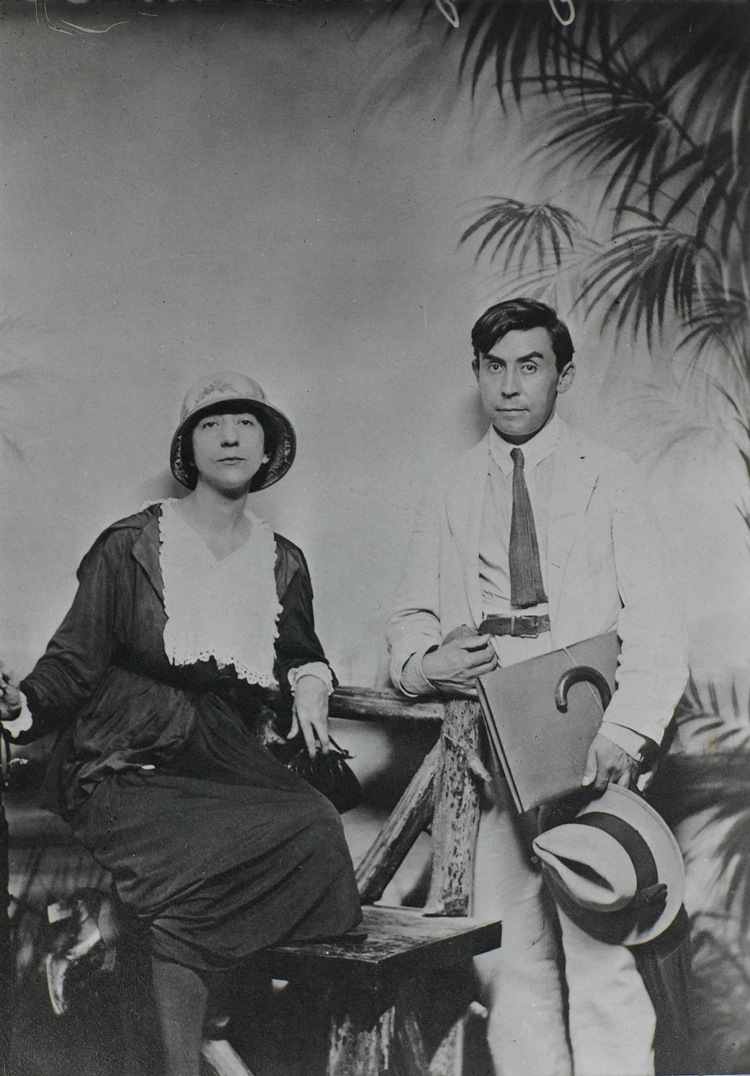
​Juliette Roche was born in Paris in 1884 in a bourgeois, liberal and cultured milieu. Her father was a journalist, left-wing politician and deputy. Very early introduced to art in the family, she took courses and at the same time integrated the Parisian artistic milieu of the early twentieth century. Under a pseudonym, she exhibited for the first time and published a collection of poems in 1907 and the following year participated in the Salon des Indépendants. She enrolled at the Ranson Academy where she learned the style of the Nabis, travelled a lot, integrated into the Parisian artistic life. After her first solo exhibition at the Galerie Bernheim-Jeune in 1914, she met the painter Albert Gleizes, whom she married in 1915. The couple moved to New York, then Spain, then returned to New York until the end of the war. Back in France in the 1920s, she participated in the Dada movement she had discovered in New York with Marcel Duchamp. She continues to exhibit and publish collections of poetry. In 1923, heiress of her father, she considered creating with her husband a community of artists. In 1926, the couple bought an agricultural property in Saint-Rémy-de-Provence which they put under management then the following year rented Moly-Sabata, an estate in Sablons (Isère) to make it a community residence both agricultural and artistic, building its organization around natural cycles in harmony with nature, already resolutely ecological. They managed to buy Moly-Sabata just before the Second World War. The war years will take place in Saint-Rémy-de-Provence where they integrate into local life. Having become a widow in 1953, Juliette Roche closed her husband’s studio in Paris and repatriated her works, some of which were donated to the Musée des Beaux-Arts in Lyon.

Prepare your visit
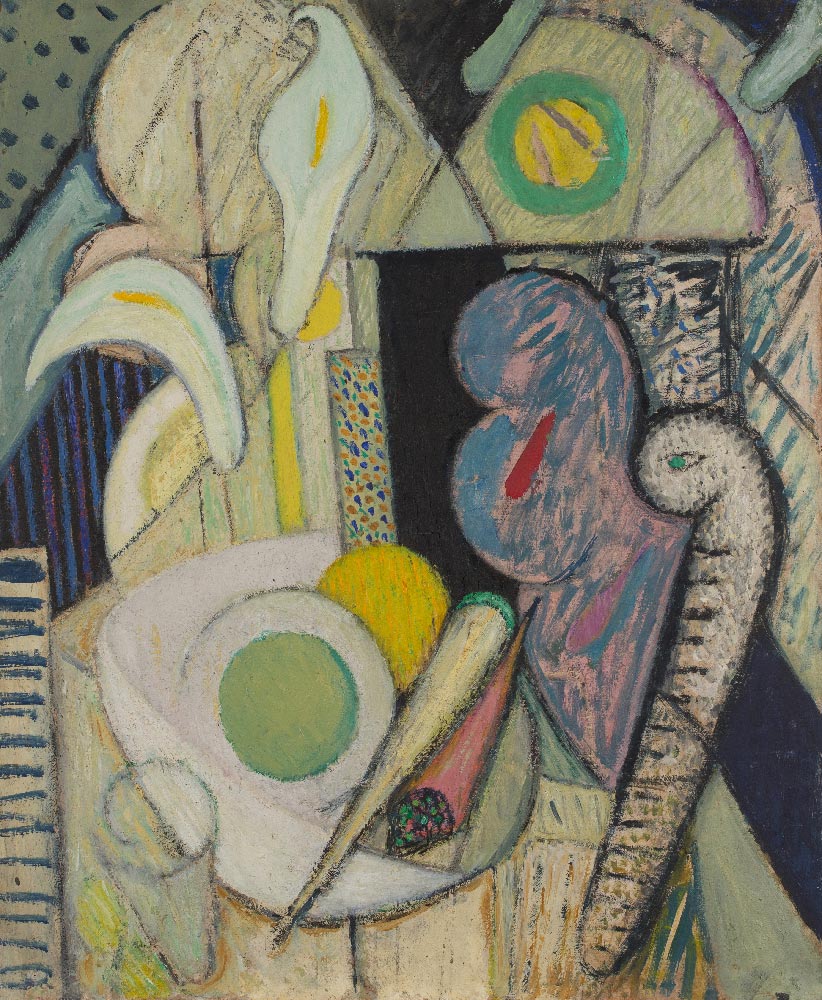
Juliette Roche (Paris, 1884 – Saint-Rémy-de-Provence, 1980) Still life with lilies, circa 1920-1930 Oil on wood chipboard Donation from the Albert Gleizes Foundation Inv. ME.2023.1.7 On her return from New York, Juliette Roche devoted herself mainly to still life. These works, of which this one is part, are characterized by a decorative exuberance already begun in Barcelona and New York. The bouquet of flowers stands out on superimpositions of various objects that saturate the entire space where a constant horror of emptiness manifests itself. Realistic or subject to sudden geometries, the elements are brought back to the vertical plane of the canvas in an ultimate ornamental resurgence of cubism. Credit: Juliette Roche, Nature mort aux lys © Aïnu - Photo Augustin de Valence - Adagp, Paris 2023
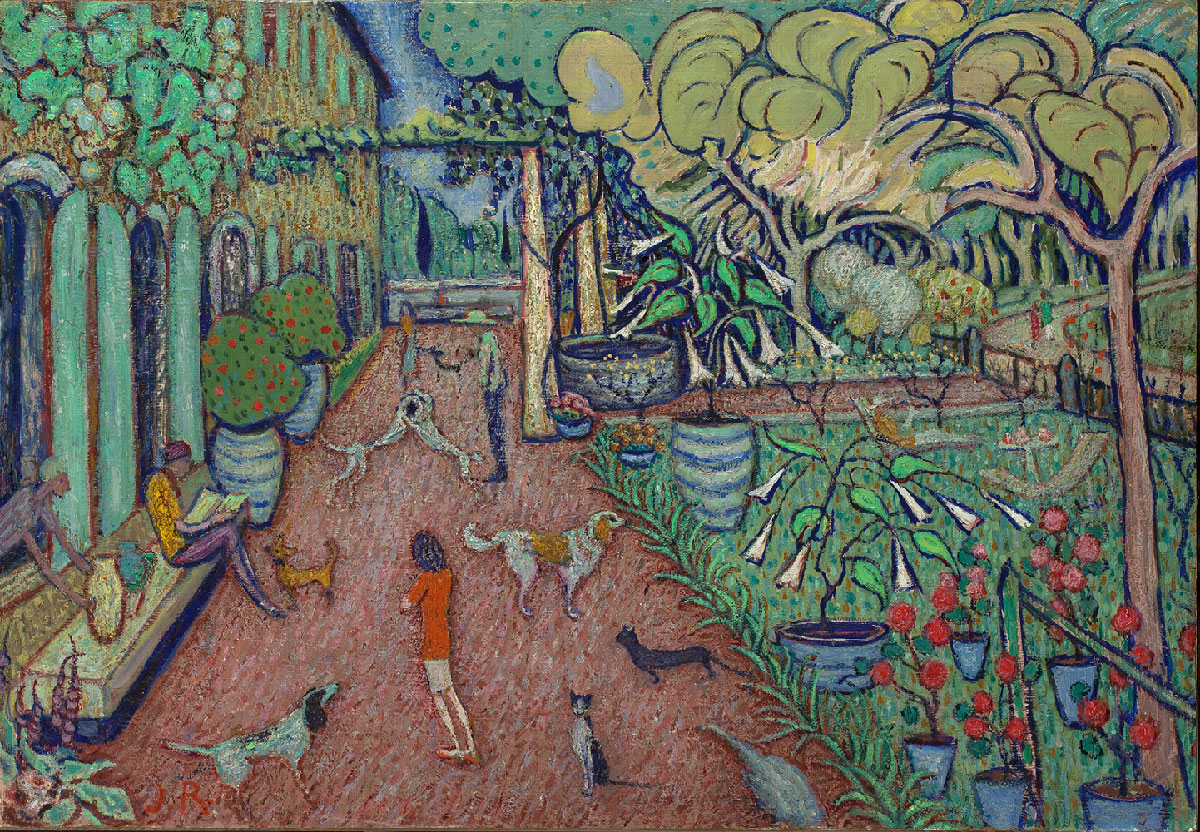
Juliette Roche (Paris, 1884 – Saint-Rémy-de-Provence, 1980) The Jardin des Méjades in Saint-Rémy-de-Provence, circa 1945-1950 Oil on canvas Donation from the Albert Gleizes Foundation Inv. ME.2023.1.10 From her Mas des Méjades, Juliette Roche delivers here a happy vision, imbued with the memory of Van Gogh. In a whirlwind of multicolored touches, cats and dogs mingle with humans in a joyful promiscuity. A defender of the animal cause and a vegetarian, Juliette Roche celebrates here an exuberant nature, much less domesticated than that of the more disturbing gardens of her nabi years. Credits: Juliette Roche, Le jardin des Méjades à Saint-Rémy-de-Provence © Musée Estrine, photo Fabrice Lepeltier - Adagp, Paris 2023
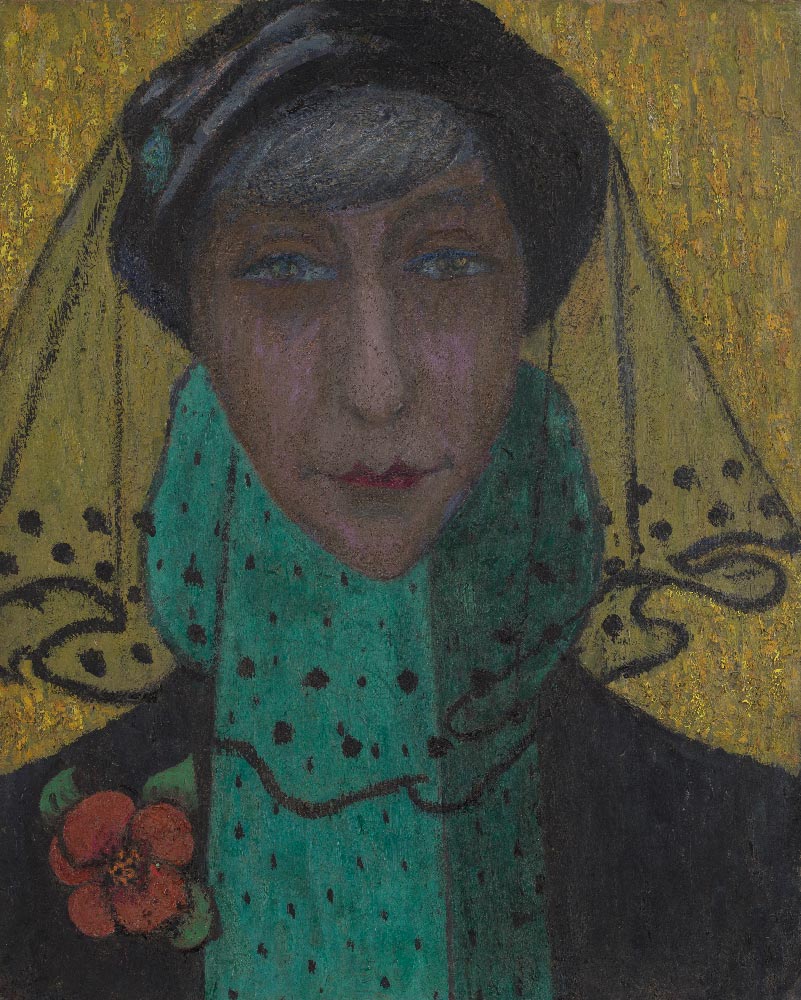
Juliette Roche (Paris, 1884 – Saint-Rémy-de-Provence, 1980) Self-portrait with a veil, circa 1953 Oil on cardboard Donation from the Albert Gleizes Foundation Inv. ME.2023.1.6 In this final self-portrait, Juliette Roche portrays herself mourning her husband, Albert Gleizes. Under the circumstances, the bright yellow background, which highlights the elegant transparent veil, amazes. Staring directly at the viewer, Roche always seems to show, despite the age, that «so piquant irony» that a critic had detected in his work from its Parisian beginnings. Credit: Juliette Roche, Autoportrait à la voilette © Aïnu - Photo Augustin de Valence - Adagp, Paris 2023

Albert Gleizes

André Marchand